by Oto | Jul 16, 2026 | Creativity, Design, Entrepreneurship, Inspiration, Personal Development, Productivity
AI didn't make me lazy. It handed me my own subconscious.
Right now I’m eating turkey pepper soup at my work desk, and I have multiple jobs running with AI.
One agent is taking a client project from brief to restructured profile to redesign, start to finish. First time I’ve ever let it run the whole thing. I don’t know if it will work. Another is deploying new functionality to one of my platforms. And in Obsidian, I’m voice-dumping to a third one, playing with an idea I want to post tonight. The post you’re reading now.
For the past year I’ve been all the way into AI. Like, REALLY into it. Last year, I was very skeptical. This year I had my road to Damascus moment, and I wrote about what I saw back in April, after building eight apps in six weeks without knowing how to code.
I said work was no longer about doing the work but directing it. That you need a meta approach: understand the work, its value, the systems and workflows around it, not just the task in front of you. I said AI was a motorbike for the mind, but it still needs a mind to steer it.
It’s hard to explain sometimes, but something in my mind shifted. I felt the shape of something, innately, and I’ve been chasing it ever since. The months since have been me living inside that idea. Pushing it to new and strange places.
Hold on. My agent just sent back design references. I’m laughing. Goddamn, that actually looks pretty good. Okay. Wow.
Where was I...
Oh yes, I’m always thinking about the work, not just the task.
What does it actually take to do the thing? What are the systems around it, what is the workflow, how does the work get done? Because once you can see that clearly, then you can abstract it. And once you can abstract it, you can encode it. And that is a profound thing.
If you can encode the work then you can manipulate it, engage with it in different modes. You can switch things around. You can add force multipliers at different points. You don’t just know what you are doing, you have a sense of how, and it can live outside your head and talk back to you.
I’ve spent months encoding ideas into software. I built a brand operating platform that walks you from audit all the way to growth. It’s built on my methodology, prompts, sequence, step by step. I found the methodology as I built the different parts, intuitively, in the dark it seemed half the time, with moments of radiant brilliant recognition.
That’s an idea encoded into a framework. It works.
Earlier this week I wrote a book about that methodology in five minutes. Assembled it, really. Five minutes of assembly, sitting on a vault full of notes, a pile of blog posts, months of conversations with my agents, and ten years of doing the work. First the idea lived in chat. Then it became software. Then content. Then the book. And halfway through restructuring the book I realised part of my software was wrong, and now I have to go fix it. That is what it looks like to attack an idea from every side.
Each medium teaching you something new about the whole thing.
Moving at this speed poses some questions. After months of it, “can I do it” is not the question anymore. It’s more like...okay, where are my leverage points? How do I stay sharp, hone my true unfair advantage, and not succumb to outsourcing the real thing to the machine?
My intuition points me to the loops. With these tools, the loops are faster. Iteration, feedback, build, review. That is the defining feature. When you can move from idea to software to content to book to corrected software in a week, what would take months, decades even, to surface and refine can come out much faster. The sheer speed of the loop makes you better faster...I think...It is a lot. The brain is still adjusting.
Now on to design...taste. That has always been the tricky part. That’s the piece I wrote off in April as the untemplatable part. And even as I push further into AI (I’ve moved from working in Claude chat, to cowork, to code, to terminal, and now my own agentic dashboard, in months), lately I’ve been circling back to doing more design, more writing, more directing. I have a clearer sense of what can be reliably delegated and what can’t. For now.
I’ve been seeing a lot of things as code lately. By that I mean breaking everything into its component parts and seeing how they relate, how they combine. I have been thinking about brand design the same way.
Here’s the workflow I’ve been running for a few weeks. Point the AI at a reference, or an old document, and have it extract everything, the ideas, the layouts, the type, the colour, the textures, the imagery, into a structured brand guide template that I can parse and it can understand.
Then we work. Sometimes twelve, thirteen, fourteen hours straight on one guide. Tweaking, tweaking, tweaking. I still work very hard. More now, I think. But every time I work hard now, the payoff is more than the thing. The payoff is the lesson. The payoff is me understanding my own process and learning how to communicate it to the machine. The work deposits something now, where it used to just get lost to the subconscious.
People say AI makes you lazy. I don’t know, not really my experience man. I think it is the most incredible extraction tool for everything you’ve been doing for years, for better or worse. All that subconscious knowledge, the stuff you were just good at without knowing why, for the first time you can extract it, name it, use it, tweak it. Being good at it becomes knowing why you’re good at it, becomes being able to hand it over. Conscious competency, then conscious delegation.
And once you have it named, and in your hand, it is a very powerful tool.
When you know the pieces, you know what to tweak. I understand the visual side of branding differently now. A component is no longer there because I like it. It is there because it makes sense for what the brand is supposed to be. Every tweak points at the concept. Naming my own process made me better at the process. The extraction improves the thing it extracts from.
Which brings me to tonight’s test. I’m tired. It’s been a heavy week, two days straight deep in platform UI, and a client needs this thing. And I’ve been wrestling my way to a simple admission: it is time to let go more. To embrace the leverage I’ve been building.
Sometimes you hold the AI’s hand all the way, step by step. But after you’ve done that long enough, like training a junior, there comes a day when you say: just do this. And what comes back is decent.
Tonight is that day. That’s the agent running the client project while I chop pepper soup.
And maybe there’s one more step. Maybe the agent that knows me, that has my context, my workflow, my biases, all the things in my head I usually have to connect myself, maybe at the end of the day I can jam with it the way I always tear the workday down, and out of that comes a blog post. In my voice. Edited by me. Fueled by my flow, by what happened today.
Tonight is the first time I’m fully embracing that as a valid part of my process. Dump to draft to posted, tonight. Because honestly, I’ve been having ideas and documenting concepts and lessons faster than I can deploy them, and I’ve been deploying fast.
So this is another experiment: what happens when I post the ideas as I have them, instead of sitting on them until they’re perfect. I want to join the conversation. I want to hear what you’re learning and trying, because some of what I’ve found is genuinely interesting, and I suspect some of what you’ve found is too.
That’s what this is. The same creative flow. With the brush, with the mouse, with the pen.
I am pouring my heart and mind out, the way I always did with a piece of paper in front of me. The way I always did with the blank Notion page.
The surface just thinks now.
The tools got smarter.
The hand is still mine.

by Oto | Mar 5, 2025 | Creativity, Design, Inspiration, Personal Development
I have always wanted to lead a creative life. The idea of spending most of my time immersed in the art, act and process of making sounds like the most appealing life to me.
Not fame or incredible wealth, but creativity.
I always thought that if I was able to sort out everything I needed to, and had enough to live off without thinking of money, I would spend all my time exploring and making stuff. That’s what I’ve always thought.
But actually making the time to do that, is a challenge.
One thing that stuck with me in my earlier years studying architecture, was the sense of a dedication to the aesthetic. And when I say that, I don’t just mean the surface look of things, I mean the philosophy and essence of thinking and making, of moulding artefacts and spaces. In this time, I was exposed to so many interesting things, and concepts. Many of which went over my head at the time, but few definitely struck a chord.
In my autodidactic journey since, I have carried that sense with me.
One thing I loved about the experience was the time in studio. We had this big open plan space where we all worked and made our models and worked on our designs. There was a compelling energy about the whole thing. And as I have delved into the lives and inspirations of artists and creators over time, I have enjoyed catching glimpses into their studios, spaces and processes.
I have always wanted a studio of my own.
It is why I call my company a studio, and not an agency.
For me the studio is a place of learning, experimenting and creating, and I think that is a beautiful thing. Creativity that is not just at the service of commerce, but a tool, a practice for being, for discovery, for evolving, for making oneself.
In trying to bring that to life, I have always had to balance this deep desire against economic realities. Most of my time and energy was held up in hustling and making money. And sure, the thing I do, my career is a creative one, so yes, I create all the time and I have grown and learned from that.
But it is my belief that creativity should exist unshackled by commerce, powered by pure soul. Which is why I have always written here, since 2010. Whether there was one person reading or a hundred.
And even when people advised me to monetise this in different ways, I always pushed back, feeling it would dilute the spirit of it. Imagine throwing ads all over this site to get ad money. Or tailoring my content to meet some algorithm instead of writing from my soul. What sin!
So today…some 14 years later, I feel ready to embrace cultivating a creative lifestyle on a deeper level. Sure, I do still need to work and spin my gears in the machine of commerce. But I am able to balance things a bit better. I want to focus on carving and cultivating a creative life.
I am a good creative. I am also a lazy one. I take a lot of shortcuts. And in the fast paced world of design and business, speed is prioritised over craft many times. I hardly have the space and time to really craft something special. In embracing a creative life and devoting time to it, I am hoping to study, to get better, to improve, to pick up new skills, to be able to do more. To learn myself, to create myself, to connect with others like me. To create cool things for you.
That is one of my personal themes for the year.
So, how does that work?
For me, it means creating all the time, in any medium.
They say you should niche down, find one thing and get really good at it.
I’m not doing that.
Personally, I want to try everything. I want to draw, and paint, write, take photos, shoot videos, design a space, design a building. I want to cook, d-jay, edit, design posters. I want to make books, and pulpy magazines. I want to work on a movie, help design a set, create in 3D and play with animation. I just want to make cool things.
When I think about cultivating a creative life, a few ideas come to mind.
Reclaim lost time
The first major challenge in living a more creative life is allocating the time to it. Making time from all the other things that demand my attention, and choosing to invest it instead in making, studying, and experimenting. What lost time can I reclaim for this purpose? What can I let go off to free up the space to create more?
Instead of scrolling, I could paint. Instead of obsessing over some client project, I could write. I could make quick sketches during my breaks. The point is learning to tuck away pockets of creativity into the mundane.
Always seek inspiration
To approach day to day life in a deeper way, to pay more attention. To not merely see things, but to really look at them, to study them, to sketch them, to research about them. To look at the mundane around you and discover the magic.
Make it easy to create all the time
I want to always be creating, with whatever time or resources I may have on hand. In compressed times, to make sketches, take notes, make snippets, make prototypes. And when able to dedicate more time, to go deeper and develop those into full works. To have the tools and set spaces available to begin creating at any time.
Watch and absorb the greats
It is important to look at what others have done. To be inspired and see ways, techniques and ideas that we can adopt into our own processes and style.
Embrace process
To be systematic in the ways that call for it, so I can be messy in execution. Being able to spread out the creative process, and do different bits at different times. To have systems, tools and processes, to capture ideas and bring them up when needed.
Embrace the discipline of practice
It does take some effort, to sit down and create, or study, or experiment, especially when you are not used to doing so regularly. But that is the point of cultivating a creative life, is to get more disciplined, to invest more time in slowing down, and engaging deeply, with art, with life.
This is my present intention, to lead a more creative life, to cultivate more of that energy, and these ideas may or may not survive contact with reality, but being creative is about sailing into the unknown and evolving into new modes of being and birthing new things.
Are you trying to cultivate more creativity in your life? What obstacles are you facing and what ideas can you share?

by Oto | Jul 18, 2024 | Creativity, Design, Inspiration, Musings, Personal Development
The concept of curation* has been on my mind for at least the past 2 years. Slowly coalescing over time as I have been fixated on the idea of defining and creating specific spaces and experiences around me.
This is a natural extension of the theme of ‘Life by Design’ - creating a life that is tailored to you, that affirms who you are, who you want to be, and what you seek to accomplish.
I have discussed the importance of your environment and why you must design your spaces in ways that support the pursuit of your goals and passions. But beyond just your environment, all things can be brought to align with your intention. The things you do, the clothes you wear, the people you interact with, the places you go. All of this can be curated around your identity.
Like I said, over the past few years, I have been engaging with this practice of curation. I have specifically selected and chosen the things around me. My space is a curation of objects and tools that are chosen and actively sought after to create the vibe I desire to live in. The people I spend time with are curated towards a similar purpose.
We all do this anyway. We all curate our lives in some way. The things we choose to watch, engage with, and use, are things that we are drawn to or exposed to. The question is, do we just allow these things into our lives haphazardly or do we consciously choose them? Because oftentimes, some of the things around us are not things we actively chose. Many times they were just always there, or they were handed to us by factors outside our control.
But being awake to life, to ourselves and our purpose, we have the ability to curate, to create around us the spaces, the people, the things, the practices, the rituals, the habits that serve that purpose, that help us grow, evolve, and be effective.
This is the philosophy of curation - bringing the practice of consciousness, of awareness, and deliberate choice to every part of our lives. To embrace the things we deem important, that give us life, fulfillment, pleasure, joy and curate around them, to invest in them, to share them. It is the path of intentionality - choosing and organising the tools, people, things and spaces that reinforce our values, desires and ambitions.
That is why we curate, as a discipline to life.
And what we choose to omit from our lives is just as important as what we choose to keep.
So what are some key things to keep in mind when curating our lives?
Know yourself, Observe yourself
Self-awareness is the starting point for all of this. It is impossible to curate if you don’t even know who you are. A sense of identity and purpose is absolutely vital. Know yourself, your strengths, weaknesses, interests, and know where you are trying to go, and what you are trying to do.
Take stock of what you have, of how things are right now. What can be improved? What needs to be adjusted, what habits do you need to drop, what rituals do you need to adopt? Look at areas where you can grow and take the necessary steps to implement them.
Curate all areas, Curate for Life
Have a holistic approach to curation and apply the principles across all areas of your life - your diet, your space, your habits, workflows, workspace, clothing, and leisure. Curate and improve every aspect of your life.
Don’t curate and optimise just for productivity and high performance, also curate for fun and pleasure, for relief, for rest and restoration. Curate your life in such a way that each part is balanced appropriately.
Seek Inspiration, Keep Evolving
It is okay to look at what others are doing. Look for inspiration and best practices, ideas that show you how great things can be in those areas of your life. They will help boost your interest and excitement and transform your life.
This is not a stagnant thing, to be done, set, and forgotten. It is a discipline, a philosophy, a way of life. To stay in tune with a sense of self, and to perpetually change and evolve the things around us in ways that stay true to who we are. As we evolve and grow over time, so we curate our lives to reflect that.
Embrace some level of chaos
We live in a world, we exist in community. Everyone has their own ideas of what is important and how lives should be. We have to exist in conversation with that. With the ideas and practice of curation, it is easy to design ourselves into isolated bubbles. But it is important to interact with things outside our curations, to have impact, to learn things we never would have, and to share our unique perspectives.
The power of curation is the ability to create the person you want to be. With it, you can significantly transform your life. It will help you hone your environment and routines in ways that will catalyse your growth and fulfilment. Add it to your toolbox, as you create a life by design.
…
Side Note
*In our present-day culture, we understand the concept of curation from the art world, the process of selecting and organising artworks into a cohesive show or exhibition. The etymology of the word is from the Latin word curare, meaning to take care. This idea of caring for something persisted from the Roman times when it meant to take care of the bathhouses. In medieval times, it denoted the priest who cared for souls, by the 18th century it had come to mean looking after artifacts and art collections.
[In a 2014 interview in the Guardian](https://www.theguardian.com/artanddesign/2014/mar/23/hans-ulrich-obrist-art-curator#:~:text=It's worth thinking about the,care of the bath houses.)*, Hans Ulrich Obrist posits that as a profession, curation meant at least four things. To preserve and safeguard the heritage of art, to be a selector of new work, to connect to art history, and to display or arrange the work.*
If I were to extrapolate those 4 key pillars to the idea of curating for life, I would say it means - to preserve what already works, to seek new ideas and practices, to connect to a deep sense of self/identity, and to be organised and deliberate in how we live.
by Oto | Aug 30, 2021 | Design, Inspiration, Personal Development, Productivity
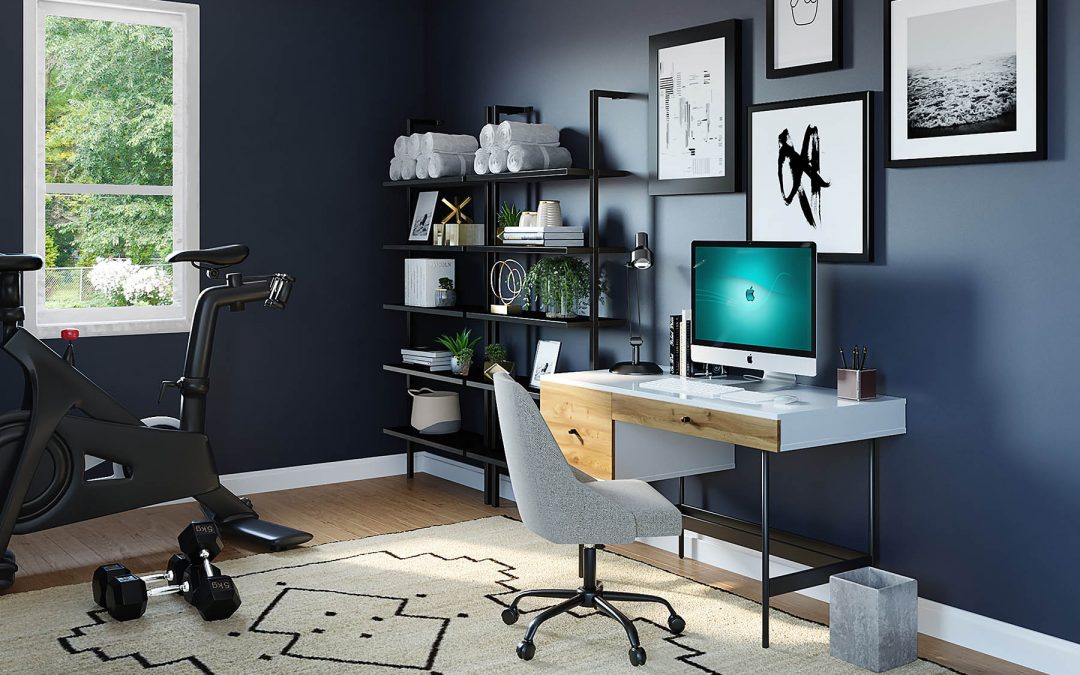
So over the past few weeks, I have been making adjustments to my living space. Mounting a mirror here, a shelf there, cleaning out and rearranging furniture, reorganising my shelves and storage spaces. It has been a fun project that will be ongoing for a while (I have many plans).
It has also got me going down the YouTube rabbit hole of interior design inspiration and space transformations. It even got an old friend hitting me up, encouraging me to get back into spatial design!
Anyway, as I do all this, I'm recognising different knock-on effects. For one, I find myself feeling better and happier about my space as I invest in it. I am a lot more considered about how I use and function in a space. I'm now always looking for ways to optimise every day activities. As I improve my environment, I think also about my processes, how I work, how I rest.
Life by design
The whole idea of life by design is learning to infuse every part of our being with intentionality. being deliberate about what we do and how we do it. A huge part of that is predicated on the spaces we inhabit. There is a reason there is an industries and professionals around the creation and maintaining of physical spaces. It is essential to our functioning as a species.
Our environment can make or break us. They can affect our mood, our health, our sense of wellbeing. They can hinder progress, and encourage bad destructive habits. Or they can support us, making it easier for us to get things done or even prompting us to take our habits more seriously.
The environment we live in is not just the actual physical spaces we dwell in, but also the people and the company we keep, the information and media we absorb, and now more than ever, the digital spaces we occupy. All of these things combine to provide the context in which we live our lives and they influence every thought, feeling and action we take.
If we took the time to observe ourselves, we would probably realise that we probably only do certain things in certain places or around certain people. Maybe chilling with a certain friend just makes it easier to drink way more than you should. Perhaps working from the coffee shop down the road allows us to reach flow much easier than working at home. The more attention we pay to the external influences in our lives, the better we will be at making sure they are working for us as opposed to against us.
Objects have power
In redesigning my space, I have done a couple of things. One of the things I've been in the process of doing is replacing almost every piece of furniture I have. Most of the things I have, I've had for at least 7 years plus. Relics from a younger and scrappier era. A second hand bed I bought off a friend who was moving houses, a desk I took off another friend's hands, the bookshelf I bought when I moved to my first apartment over 10 years ago, The TV I've been using as a second screen for a decade. All these things served me well, but at this point, a grown man with a mismatch of pieces, some of them falling apart, seeing and using these things did not inspire me with a sense of awe or make me feel like I was moving forward. They were just icky and I had outgrown them all.
Everything we see and absorb and interact with has an effect on our thoughts, our subconscious, our intention and our actions, and definitely our results. If we are able to surround ourselves with objects and possessions that truly spark joy, we are left with an abiding feeling of inspiration and possibilities.
Not to say you have to go all out now and spend a fortune improving and upgrading your space. You do not have to do it all at once, you can take it step by step. Buy a new desk this month, and then a shelf the next, etc. Or simply just reorganise your space. The point is to be intentional about our spaces, and get creative and open-minded as to the potential.
And in these days where most of us are working from home anyway, we should be doing what we can to make our paces are supportive as possible.
Here are some general principles and ideas to think about when improving your space.
Think about what you already do and what you want to achieve.
What is your routine like right now? What things do you need to get done on daily, weekly basis? What goals are important to you right now? How can you make your environment support that? Do you need to create dedicated areas for specific tasks? For your work or your hobby, or that special project? For instance, maybe you want to read more, it could help to have your books neatly arranged within reach of your favourite chair, or you create a reading nook with a comfortable place to relax and dig into a book.
Set up your space in a way that reduces friction
Friction is the resistance that blocks you from doing what you need to. You reduce it by making it easy to do what you need to do. For example, there is the popular advice of having your workout clothes next to the bed when you sleep so you can get right into them when you wake up and go for a run or whatever. You make it easier to work out by reducing the friction of finding your clothes. Some people even take it as far as sleeping in their work out clothes.
Another way to reduce friction is simply by bringing the necessary tools closer at hand.
I wanted to get more frequent with my workouts, so just before the first lockdown, I got a few pieces of equipment - the fitness tower being the main highlight. Previously I'd be lucky to get to the gym to get a workout in once a week. Now I find myself working out multiple times a week easily. Having the resources and dedicated space for it easily at hand reduces that friction massively.
Make it beautiful
Aesthetics are important. Beautiful spaces just make you feel good. A space that looks good and is functional will do wonders for your mood and orientation while you are in that space. It can even influence how you feel about and view yourself. So make it beautiful and inspirational.
Look around for ideas, there's a ton of it out there. Figure out the style you are partial to and bring that in to your space. Even small tweaks and improvements like scents, light, candles, pictures, etc can make a massive impact. I tilted one of my bookshelves by 45 degrees and it made such a huge difference in the space and my access to those books.
Optimise your productive space
Most of us have to work from home in some capacity, or at least have a space at home to be productive at outside work hours. This could be the place we prep for work, help the kids study, whatever. We probably already have such spaces set up already, but there is probably also a lot that we can do to improve and make it even better.
Think about what you need to do to get your work done and set up the space to support all of that and make it easier for you to get settled in and get right to work.
I do most of my work in my studio at my desk, in front of my laptop. And for the most part, I was pretty fine with my desk setup, until going down the rabbit hole recently, I've realised there are actually many things I can do to reduce friction, reclaim space and just make my workspace a lot more pleasant and productive to be in.
From cable management, to docking stations, ergonomical chairs, back lighting and charging hubs, you can build out a space that is very comfortable and optimised to your personal productivity.
Our environments are huge parts of who we are. Curate yours to reflect who you are and support your ambitions. When you upgrade your space intentionally, you will find that you have inadvertently upgraded your life too. From the renewed experience of living in the space, you will find yourself feeling even more motivated, focused and pumped up to go.
And that is a powerful thing.

by Oto | Jun 25, 2018 | Creativity, Design, Entrepreneurship, Inspiration, Musings, Personal Development, Productivity
If there is one thing I’ve come to see over the years of working and living is that generally, things tend to take longer than you think and certainly longer than you’d like. From small things like the design jobs I work on, to the bigger long-term projects, they can seem to drag on and on, and then life gets in the way and you lose focus.
To remain focused and consistent in the face of a seemingly unending struggle is sometimes a herculean task. But it is one that must be handled if you will succeed. Because that is part of the dip, that long chasm between desire and fulfillment. It is a battle, it is war.
There is a quote I often mention to my friends, that ‘the work belongs to you, but the results belong to God’. It is an admonishment and an exhortation to focus on what you control.
You can’t control when certain things will happen. You can’t control when that deal will come through, or if it will come through. All you can focus on is doing everything that is within your power – preparing, poking holes in your strategy and fixing them, making your case stronger, improving your art, improving your marketing and persuasion. You just have to do all you can, patiently waiting for your turn, ready for the moment Lady Luck smiles on you.
But where does the line fall between being patient and wasting time? It is a tough one for sure. Your being patient with your situation might mean that you are not being proactive enough or doing things that will move the needle forward towards your aims. But sometimes the right and hardest thing to do is nothing. Sometimes all you must do is wait and let the situation resolve itself, let the weather pass, let the opportunity present itself. Other times you must take initiative.
Whatever we choose, whatever the right action to be taken, it is important to remain vigilant. Because if you lose sight of what you are trying to achieve, if you begin to drift, you will soon enough find yourself caught off course and unawares. Be patient but stay vigilant on the goal.
There is the parable in the bible about the bridesmaids and the oil. The entire party is waiting on the groom and he takes forever to arrive. But eventually he does, and when he does, half the party has burned through their oil and can’t light their lamps. The other half were vigilant and better prepared with extra oil and were able to continue with lit lamps into the celebration because they remained goal focused even in the midst of a severely delayed plan.
And that is a form of persistence, not merely of action, but a keen presence of mind.
What do you do when you are blocked? When you are stopped, and all you can do is wait? What do you do when you are forced to take a break? When even though it’s all you want to do, you just can’t move forward yet? Do you give up and lose steam, or do you lean in and use this gift anyway?
Ryan Holiday shares Robert Greene’s distinction between alive time and dead time. The difference between the two is what you do with it. What do you do with your waiting time? Are you passive, letting your skills atrophy? Do you lose your momentum, or do you find some use for the time you have? Do you keep studying and honing the skills? Do you keep learning? Do you keep preparing, do you stay sharp?
Gary Vaynerchuk has the mantra of ‘Macro Patience, Micro Speed’, it is an incredible encapsulation of a deep-rooted truth, that in the long run, things just take time, that’s why you have to take the wide view, the macro view. But in the day to day, you have to act, you have to hustle, you have to be vigilant. You have to stay hungry and motivated.
That is the dichotomy, the paradox. To make haste, but slowly. To do all you can do today, and this year, but knowing that your dream might take months, or years or decades. In all that, you must play the time, you must keep on working towards the goal. It is a long-term commitment to perpetually being excellent in the short term. It is not easy, but it is necessary if you will get what you want.

by Oto | May 8, 2018 | Design, Entrepreneurship, Inspiration, Personal Development, Productivity
(Or, how to think about strategy)
Trying to get things done and pursuing a long-term goal can be daunting. You are aiming at an eventuality that is still quite far off. You have a sense of where you are going but don’t know quite know how to get there.
You see the mountain top, the main goal you are trying to accomplish, but you are still far off. You have started by doing it badly, but that’s just step one of hundreds of steps to get there.
Is there a way of thinking, a way of acting, that allows the actions we take to build on each other, to gain momentum, and build into a giant snowball racing furiously to our destination?
I think there is, and it’s a combination of strategic thinking and aiming for the domino effect.
Usually people’s efforts are haphazard, they are busy tied up doing a thousand and one things, but none of it is proactive, they are simply reacting to their environment. They end up expending energy in numerous directions, and achieving relatively little, running and running but staying in the same place.
But imagine if you could reduce or at least hone your efforts so they all work together to provide better results faster, building on each other to move you to the new place you desire.
That is the idea of strategy. Of achieving superior results with the same level of activity but just better directed. This is essentialism, this is the one thing, this is make less, work more.
Good strategy takes a look at the facts as they are. What are you really trying to achieve, what are the real problems in your way, what can you tackle and solve, in what order do you tackle them and what cohesive set of actions will you take to get there?
The domino effect is illustrated in the book ‘The One Thing’. Gary talks about lining up your dominoes. Each domino is an action or a mini goal. You place your goals in the right order, knowing what the one thing that would make everything else easier or move you closer towards your goal. You line that one thing up so that doing it will knock down the next thing that would make everything easier or move you closer to your goal. And so on and so forth.
Overtime, domino hits domino, and you build momentum with the energy growing and transferring with each action and toppled target.
For this to work, you need to have a sense of the interconnectedness of things between where you are now and where you are going. And you have to respect the order in which you are doing them. If you tackle the wrong domino, you will have wasted effort and need to double back to fix it.
It is like the designer or client that so eager to jump into the aesthetic design of a product without tackling the domino of strategy – who is it for, what do they need, why should they care. Or the fitness chaser running around in the gym without sorting out her nutrition first. Or worse still, a builder crafting the most gorgeous building without setting a proper foundation first.
You must strive to tackle your dominoes in the right order. In that way, each step you take would improve your odds of success.
When you let your moves stack on each other, each action creates a result that becomes the seed of the next action. So, with my business for instance, taking the time out to clarify a service offering – brand, design, digital – makes it easier for me to communicate and sell services. Taking time to define work processes for each service, makes it easier for me to work and replicate the process with clients. The design process includes me making mockups and prepping the products to look a certain way, which makes it easier down the line to showcase work done on the website, which then act as case studies and feed into content, which then feeds to sales and more work and growth for the company.
In that way, each move is made to make the subsequent moves easier, and the results of each move serve as the beginning of the next move.
To accomplish this, you have to be able to hold a vision of a desired result or situation, and then hazard a guess, a hypothesis of the possible ways forward, and then track a path that will lead you eventually to said goal.
Making your moves stack on each other can be weird territory. When you start, you don’t know anything, you are exploring options and looking for something that resonates, that grips your attention. And then you find it, and you keep working on it, you start to garner some recognition, some attention. Your moves start to give you a position that you can leverage to the next thing.
Sometimes it is easy enough, you can track your path fairly clearly, you have a good enough idea of what is needed, and the conditions are stable. Sometimes it is much harder than that, because the fog is thick, and conditions are constantly changing. You may not be able to identify all the dominoes, but you can work to increase your odds of success.
This is where you have to be woke to what you are trying to achieve and look for opportunities to move closer to that. Sometimes, you need to side step and tackle things obliquely. Sometimes it might even mean slowing down on the thing that has gotten you here, so that you can invest in the thing that will take you there.
But keep this idea in mind, hold a long-term view of your vision, connect the dots backwards and let each action become a stepping stone, and each lesson another arrow in your quiver, your moves will build and propel you to your destiny.